
If you’ve spent any time researching how to build a product under your own brand, you’ve encountered these terms: white label, private label, contract manufacturing.
They’re often used interchangeably, and rarely explained clearly. They all involve a factory making a product that you sell under your name. Beyond that, they describe fundamentally different business models with different implications for cost, control, customization, and the kind of factory relationship you need.
Getting clear on which model fits your business before you start talking to factories saves a significant amount of time and prevents a common frustration: approaching the wrong type of supplier for what you’re actually trying to do.
For a broader overview of the sourcing process, see our Complete Guide to Sourcing from Asia.
Definition of Terms
White Label
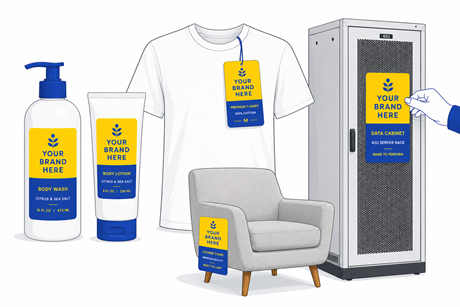
White label is the simplest model. A factory produces a product – a water bottle, a foam roller, a storage bin – and sells that same product to multiple buyers, each of whom puts their own branding on it. The product itself doesn’t change between buyers. You’re not customizing anything meaningful about what’s being made; you’re putting your name on something the factory already produces for everyone else.
White label is the fastest and lowest-cost way to get a branded product to market. There’s no product development, no tooling investment, and no minimum complexity in the factory relationship. The tradeoff is that your product is identical to what your competitors can buy from the same factory. Your brand and marketing is the only differentiator.
Private Label
Private label goes a step further. You’re still working within a factory’s existing manufacturing capabilities, but you’re customizing the product to make it distinctly yours: different materials, colors, dimensions, features, or packaging than what the factory offers as a standard product. The factory already knows how to make the base product. You’re specifying a version of it that other buyers can’t easily replicate.
Private label gives you meaningful product differentiation without the full investment of developing something from scratch. It’s the model most established e-commerce brands and consumer product companies operate in. You own a product that’s yours in a meaningful sense, without bearing the full cost and complexity of custom product development.
Contract Manufacturing
Contract manufacturing is a different category in which you own the product design. Depending on the exact arrangement, you will usually own the engineering drawings, the specifications, the molds and tooling. The factory’s job is to execute your design, not to adapt their existing product to your requirements. They make what you tell them to make, to the tolerances and standards you specify, using the materials you’ve defined.
The factory cannot sell your product to anyone else because the design is yours. The tooling you paid for produces your part and no one else’s. This has to be established in the contracts you sign with them.
Contract manufacturing requires more upfront investment in product development and tooling, and it takes longer to get to first production. What it produces is a product that is genuinely and exclusively yours.
China: The Full Spectrum
China is the only sourcing country where all three models are readily accessible across virtually every product category. Understanding why helps explain both China’s enduring manufacturing dominance and why it remains the default starting point for most brands regardless of the current tariff environment.
Cluster Cities
One of the least understood advantages of sourcing from China is the geographic concentration of entire manufacturing ecosystems around specific product categories. China has developed cities and regions that specialize in particular industries: Yiwu for small commodities and consumer goods, Foshan for furniture and ceramics, Shenzhen for electronics, Wenzhou for footwear and leather goods, and so on. Within these clusters, a factory producing a finished product has its component suppliers, material processors, tooling shops, and finishing operations within a short geographic radius.
This proximity matters enormously for finished-product sourcing. A furniture factory in Foshan can source wood components, metal hardware, upholstery fabric, and foam from suppliers within the same industrial zone and assemble a finished product efficiently and at competitive cost. The same factory in another country would face a significantly more fragmented supply chain to pull together the same combination of inputs.
Assembly Operations
China’s cluster ecosystem has also given rise to a category of supplier that sits between a pure factory and a trading company – what you might call an assembly operation. These suppliers manufacture some components in-house and source others locally, assembling a finished product they offer as part of a full line of related product types.
A bathroom vanity supplier is a good example. They might produce the cabinet boxes in their own facility, source the quartz countertops from a stone fabricator nearby, and buy the sinks from a ceramics factory in the same industrial zone. The result is a complete, finished SKU they can offer at competitive pricing, not because they make everything, but because everything they don’t make is available close by.
This model isn’t a red flag the way a traditional trading company is. The supplier has genuine manufacturing capability and real control over the assembly process and final quality.
They can be the perfect choice for the right buyer. For example, a property developer or construction subcontractor may do very well sourcing these finished products for their projects.
Just be careful to understand the tariff implications of each product type. Many construction materials from China, for example, are subject to anti-dumping duties that may force you to look elsewhere.
For more on that subject, check out our post on Country of Origin and its implication for tariffs.
White and Private Label in China
The cluster model is a large part of why white label and private label sourcing is so accessible in China. A factory operating within a developed manufacturing ecosystem can offer a finished product across multiple material types and production processes without building every capability in-house.
That breadth of finished-product options at very competitive pricing is difficult to replicate in countries where the sub-supplier ecosystem is less developed.
For white label buyers, China’s depth means there is almost always a factory producing something close to what you need, ready to put your label on it. For private label buyers, the same ecosystem means factories can accommodate meaningful customization – different materials, different dimensions, different finishes – without the supply chain complexity that would make the same customization prohibitive elsewhere.
The tariff environment has changed the cost calculation for China sourcing, but it hasn’t changed the manufacturing depth. For many product categories, particularly those involving multiple materials or complex finished goods, China remains the most practical option even after tariffs are factored into the landed cost.
Vietnam: Specialist by Nature
Vietnam is a strong and growing sourcing destination, but it operates differently from China in ways that matter significantly for buyers choosing between white label, private label, and contract manufacturing.
Contract Manufacturing First
Many (though not all) of Vietnam’s most capable factories are contract manufacturers. A sheet metal fabrication facility, a precision CNC machining operation, or an electronics assembly plant in Vietnam is typically built around executing customer specifications – they work from your drawings, your tolerances, and your materials.
They don’t have a product catalog because a fixed product offering is not their model. They make parts, assemblies, and finished products, but only to order and based on the customer’s specifications.
For a buyer approaching one of these factories with a white label or private label request, the conversation often goes nowhere. It’s not that the factory can’t produce quality work, it’s that the request doesn’t match how they operate. They are manufacturing partners, not product suppliers.
In China, for example, you may find many sheet metal factories making data cabinets for use in data centers or corporate offices. They will have lines of standing, wall-mount, and open-rack cabinets ranging from 1U to 55U and a variety of customization options packaged in a nice product catalog for you to buy from.
In Vietnam, you are more likely to find a sheet metal factory that can do an excellent job making any of the same products, but only if you provide 3D drawings of exactly the product you want to make. You can probably get better landed costs thanks to Vietnam’s lower tariffs, but the sourcing process will be more complex.
White and Private Label in Vietnam's Strong Categories
Where Vietnam does offer white label and private label options, it does so very well. Apparel, footwear, furniture, and textiles are the categories where Vietnam’s manufacturing base is deepest and most developed for international buyers.
Factories in these categories have experience working with foreign brands, understand export compliance requirements, and can accommodate meaningful customization within their product range.
Outside these core categories, white label and private label options become more limited. Vietnam doesn’t have the breadth of finished-product manufacturing that China’s cluster ecosystem enables, and the sub-supplier infrastructure for complex multi-material products is less developed.
A buyer sourcing a product that involves multiple material types and production processes will generally find fewer options in Vietnam than in China, and those options may require more supply chain complexity to execute.
For more on how to evaluate Vietnam vs. China as a sourcing destination, and how tariffs affect that decision, see our US Import Tariffs: Complete Guide.
Matching Your Model to Your Sourcing Country
The decision about which product model you’re pursuing and where you source it aren’t independent choices. They’re connected, and making them together produces better outcomes than making them separately.
Here’s how the three models map across the two primary sourcing countries for most US importers.
White Label
China is the strongest option for white label sourcing across the broadest range of product categories. The combination of the cluster city ecosystem, assembly operations, and deep finished-product manufacturing means there is almost always a factory producing something close to what you need, ready to put your label on it.
Vietnam offers genuine white label options in its core categories — apparel, footwear, furniture, textiles — and does them well. Outside those categories, white label options become thinner. If your product falls outside Vietnam’s manufacturing strengths, China is likely your only realistic white label option regardless of tariff considerations.
Private Label
China again offers the broadest private label options across the most product categories. The ability to customize materials, dimensions, features, and finishes within a factory’s existing capabilities is supported by the same sub-supplier ecosystem that makes white label so accessible. If a Chinese factory doesn’t have a component you need for your customized version, there’s a good chance a supplier nearby does.
Vietnam is competitive for private label in apparel, footwear, furniture, and textiles. Vietnamese factories in these categories have worked with enough international buyers to understand what private label customization requires and how to execute it. Outside these categories, the same limitations that apply to white label apply here: less finished-product breadth, less sub-supplier depth.
Contract Manufacturing
Both China and Vietnam have strong contract manufacturing capability, but for different types of products.
China is the stronger choice for contract manufacturing that involves complex tooling, multiple material types, or products that benefit from a nearby sub-supplier ecosystem. If your product requires custom injection molds, complex metal fabrication combined with other materials, or assembly of components from multiple production processes, China’s manufacturing infrastructure supports that work more completely than Vietnam’s.
Vietnam is the stronger choice for contract manufacturing in specific process categories where it has developed deep expertise — sheet metal fabrication, precision CNC machining, aluminum extrusion, textile and garments, and furniture applications. Its electronics capabilities are also growing rapidly stronger.
For products that fall squarely within those capabilities and can be fully specified in your own engineering and drawings, Vietnamese contract manufacturers can produce excellent quality at competitive landed costs, particularly given the current tariff differential with China.
Take the data cabinet example above. If you have 3D drawings and can fully specify what you need, a Vietnamese sheet metal factory may give you a better landed cost than a Chinese equivalent. If you want to choose from an existing product line and customize from there, the Chinese factory is the more practical partner.
The Tariff Variable
That brings us to tariffs, which run through all of these decisions. For white label and private label in Vietnam’s strong categories, the tariff savings relative to China are real and often significant enough to make Vietnam the clear choice.
For complex contract manufacturing or finished-product sourcing that requires China’s sub-supplier ecosystem, the tariff cost may simply be part of doing business – because the alternative isn’t a cheaper option in another country, it’s a more complicated and expensive supply chain that produces a worse outcome.
The right framework is total landed cost combined with supply chain feasibility and manufacturer capability, not tariff rate alone.
For how to calculate your full landed cost including duties and freight, use our Landed Cost Calculator.
Choosing Your Sourcing Strategy
Factory models, country ecosystems, and changing tariffs make the sourcing decision more difficult than it at first appears. Some tips to get you started:
Define Your Need Before You Start Looking
The single most useful thing you can do before contacting a supplier is get clear on which model you’re actually pursuing. It determines which factories are relevant to talk to, what information you need to provide in a first contact, and what kind of relationship you’re building.
Approaching a contract-only Vietnamese sheet metal factory with a white label request wastes everyone’s time. Approaching a Chinese assembly operation expecting the pricing transparency and production control of a direct factory relationship sets up unrealistic expectations.
The mismatch between what a buyer is looking for and what a factory actually does is one of the most common sources of frustration in overseas sourcing, and it’s almost entirely avoidable.
Match Your Model to Your Business
Some brands move through the three models as they grow. White label to validate a product concept and build revenue quickly and cheaply. Private label once the concept is proven and differentiation matters. Contract manufacturing once volume and market knowledge justify owning the product fully.
That progression isn’t universal. Some businesses start with contract manufacturing because their product requires it, and some businesses are well served by white label indefinitely.
But if you’re early in building a product line, starting with a model that matches your current stage rather than your eventual ambition saves significant upfront investment and lets you learn what the market actually wants before committing to a fully custom product.
Protecting Your IP in Contract Manufacturing
If you’re pursuing contract manufacturing and you own the design, make sure that ownership is established clearly in your contracts with the factory.
This means specifying who owns the tooling, who owns the drawings, and what the factory is and isn’t permitted to do with the manufacturing knowledge they develop working on your product.
A well-structured contract manufacturing agreement protects your investment in product development and prevents the factory from producing your design for other buyers.
This is particularly important in China, where IP protection has historically been a concern for foreign buyers. It’s less of an issue than it was a decade ago, and working with established factories with a track record of international contract manufacturing relationships reduces the risk significantly.
Still, it’s not something to leave to a handshake agreement. If you are doing anything with IP concerns, be sure to consult a lawyer with international contract experience in the country you will be sourcing from.
For a full breakdown of how to evaluate sourcing countries, see our Complete Guide to Sourcing from Asia.
For how tariff exposure varies by country and product, see our US Import Tariffs: Complete Guide.
Finding the Right Factory for Your Model
Whether you’re putting your brand on an existing product, customizing something to make it distinctly yours, or manufacturing a product you’ve designed from scratch, the factory relationship you need looks different in each case — and so does the sourcing country that makes the most sense.
First Link works with businesses across all three models and across China, Vietnam, India, and Southeast Asia. We help brands and businesses identify the right factories for what they’re actually trying to do, manage the supplier relationship and production process on the ground, and handle the import logistics end to end.
If you’re figuring out which model fits your business, evaluating sourcing countries, or looking for a manufacturing partner in a specific category, we’d be glad to talk.
This post is part of our Complete Guide to Sourcing from Asia.