
Last updated: June 16, 2026. We’ll update this post as new developments occur.
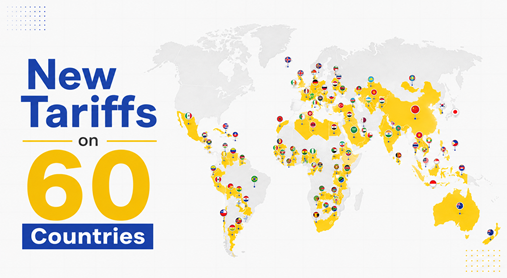
On June 2, 2026, the US government proposed a new round of Section 301 tariffs covering 60 economies, which together account for the vast majority of US trading partners. This is separate from the China-specific Section 301 tariffs that have been in place since 2018, which we cover in our China Tariffs in 2026 guide. This is a new, broader action that could affect importers sourcing from almost anywhere.
Here is what was proposed, what it means, and what to watch for next.
In March 2026, the US Trade Representative (USTR) opened an investigation into whether 59 countries and the European Union were failing to adequately prohibit and enforce restrictions on imports made with forced labor. On June 2, the USTR issued its determination: all 60 economies were found to be falling short, and new tariffs were proposed as a result.
The proposed rates come in two tiers. Countries found to have at least a partial enforcement framework in place would face an additional 10% tariff. Countries found to have no meaningful enforcement at all would face an additional 12.5%. Six countries, Canada, Ecuador, the European Union, Indonesia, Mexico, and Pakistan, landed in the lower 10% tier. The remaining 54 economies face the 12.5% rate.
These tariffs are not in effect yet. This is a proposed action, not a final ruling.
When New Tariffs Could Take Effect
USTR is accepting public comments through July 6, 2026, with a hearing scheduled for July 7. No final date or deadline has been issued.
However, many expect that the new tariffs will be issued by July 24. That is because the current Section 122 tariff, the 10% global surcharge that has been functioning as a bridge since the Supreme Court struck down the IEEPA tariffs in February, is set to expire July 24.
The administration has been working to replace that authority with more legally durable tariff programs before it lapses. A final rule following shortly after the July 7 hearing would not be surprising.
What This Means for Your Sourcing
If finalized, these tariffs would stack on top of whatever already applies to your goods: base duty rates, existing Section 301 tariffs if you’re sourcing from China, Section 232 if your product involves certain metals, and any applicable anti-dumping or countervailing duty orders.
The bigger takeaway is that there is no longer a clearly tariff-safe country to default to. With 60 economies in scope, plus separate ongoing investigations covering 16 countries for structural excess capacity, almost every major sourcing destination now carries some form of active tariff exposure or risk.
We should expect to know where things stand for every country around that July 24th date.
Until then, model your landed costs for Q3 and Q4 at the higher end of current estimates rather than assuming today’s rates are the ceiling.
For the full picture of how tariffs currently stack on goods from China, see our China Tariffs in 2026 guide.
For a complete breakdown of every active US tariff program, see our US Import Tariffs: Complete Guide.
The trade environment has changed several times already in 2026, and this proposal is unlikely to be the last development before the year is out.
First Link helps importers model their actual cost exposure across sourcing countries and adjust their supply chains as the rules change. If you want to understand how this proposal could affect your specific situation, we’d be glad to talk.